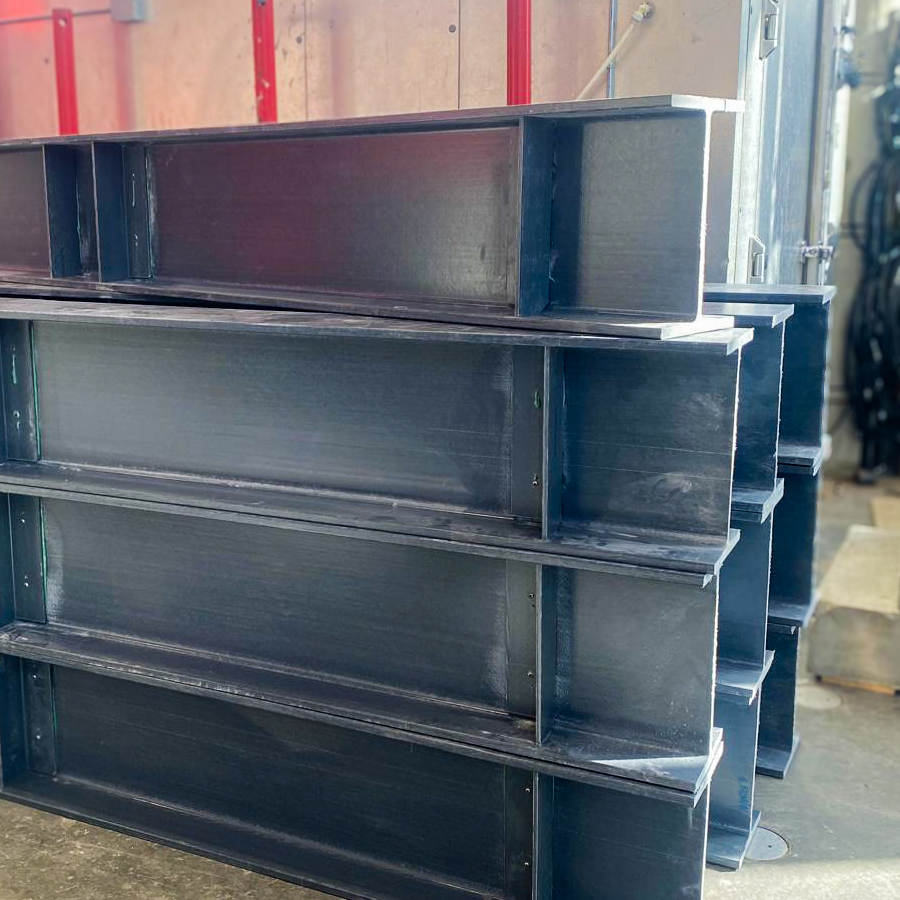

Pultruded FRP I16 Beams
A joint research initiative between industry and academia to optimize and evaluate pultruded FRP I16 beam structural performance.
Services
Structural Design
Specialty Materials & Engineering
Research & Testing
Project Partners
Creative Composites Group
North Carolina State Univeristy
Market sectors
Advanced Materials
Research & Testing
Location
North Carolina State University Constructed Facilities Laboratory (CFL)
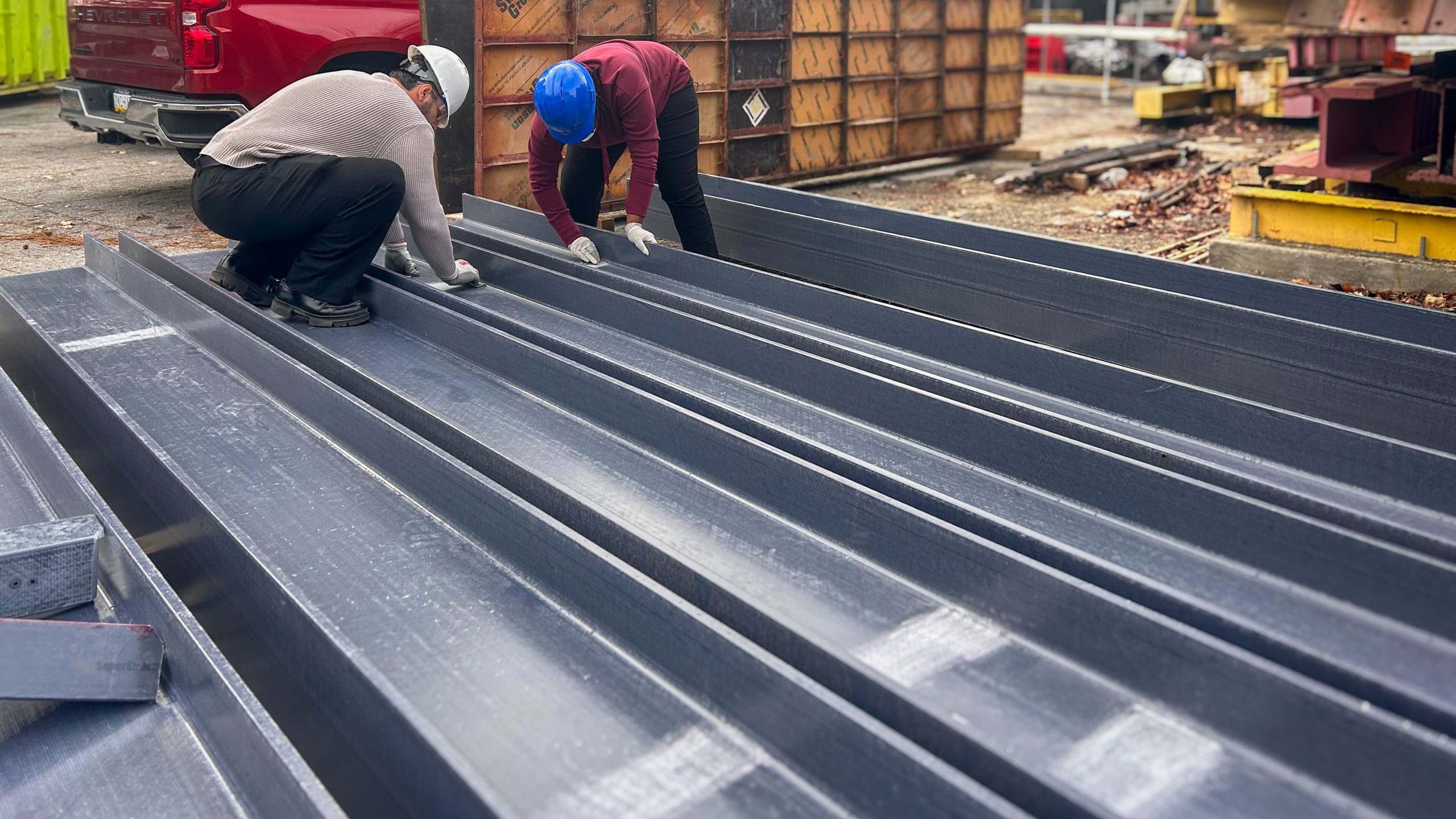
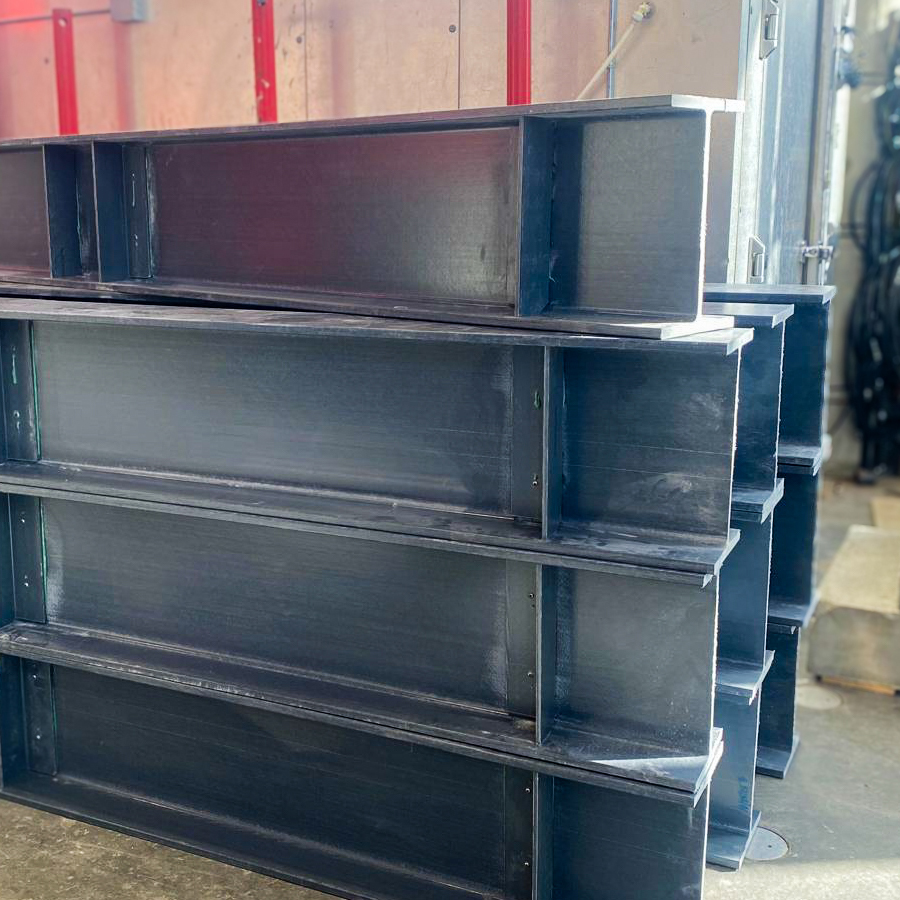
Pultruded fiber-reinforced polymer (FRP) is reshaping the future of structural materials. Manufactured through a continuous pultrusion process—where fiber reinforcements are pulled through a heated die to create consistent, high‑strength profiles—FRP offers a unique combination of corrosion resistance, durability, and light weight. These advantages make pultruded FRP framing solutions increasingly attractive for modern infrastructure applications.
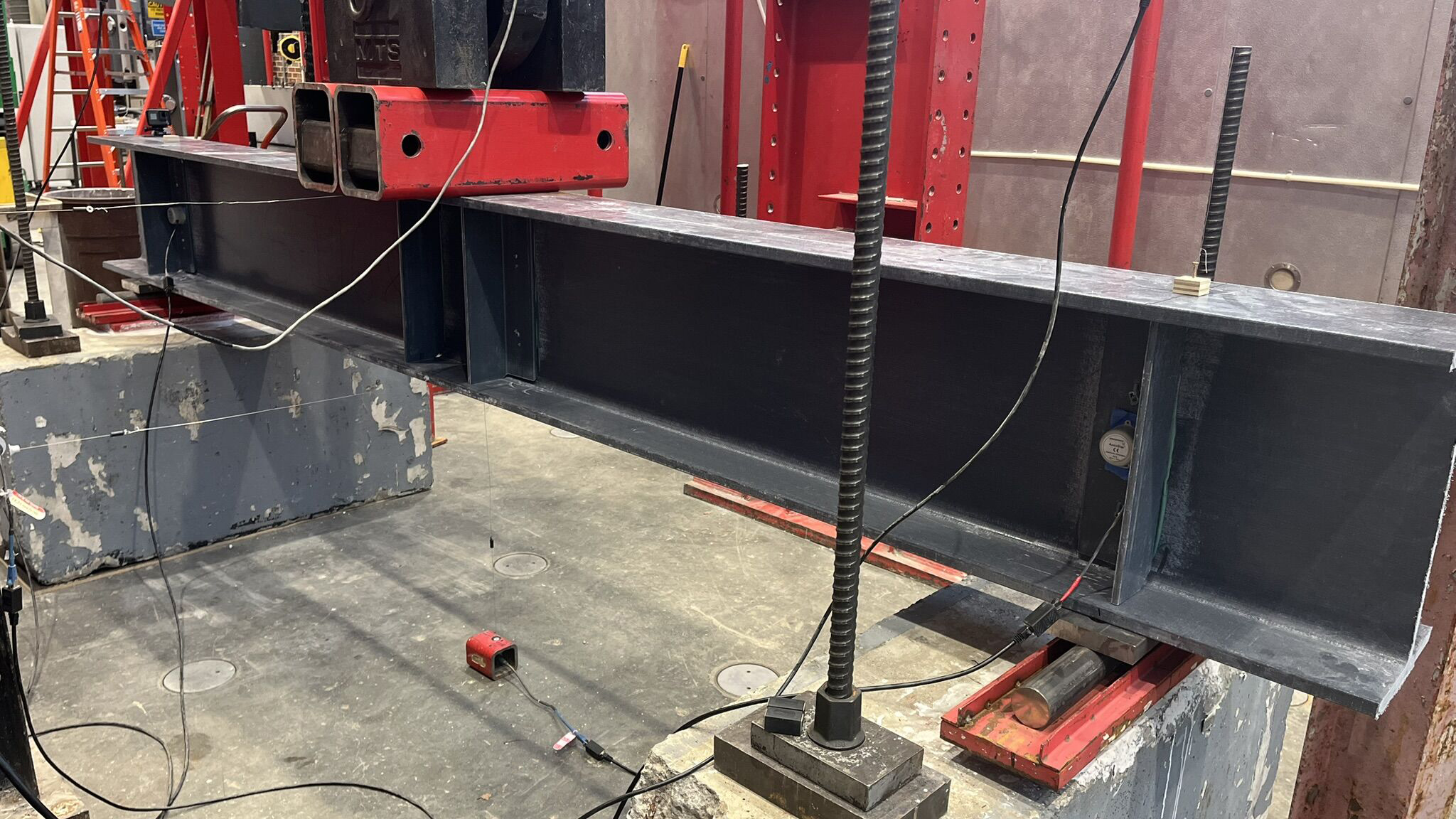
To support the expansion of viable spans and project applications, Creative Composites Group (CCG) engaged Frost Engineering & Consulting to lead the design, optimization, and structural evaluation of a newly developed pultruded FRP I16 beam profile. Frost’s role included conceptual development, structural optimization, and full-scale testing to quantify strength, flexural stiffness, and span capabilities in alignment with ASCE/SEI 74.
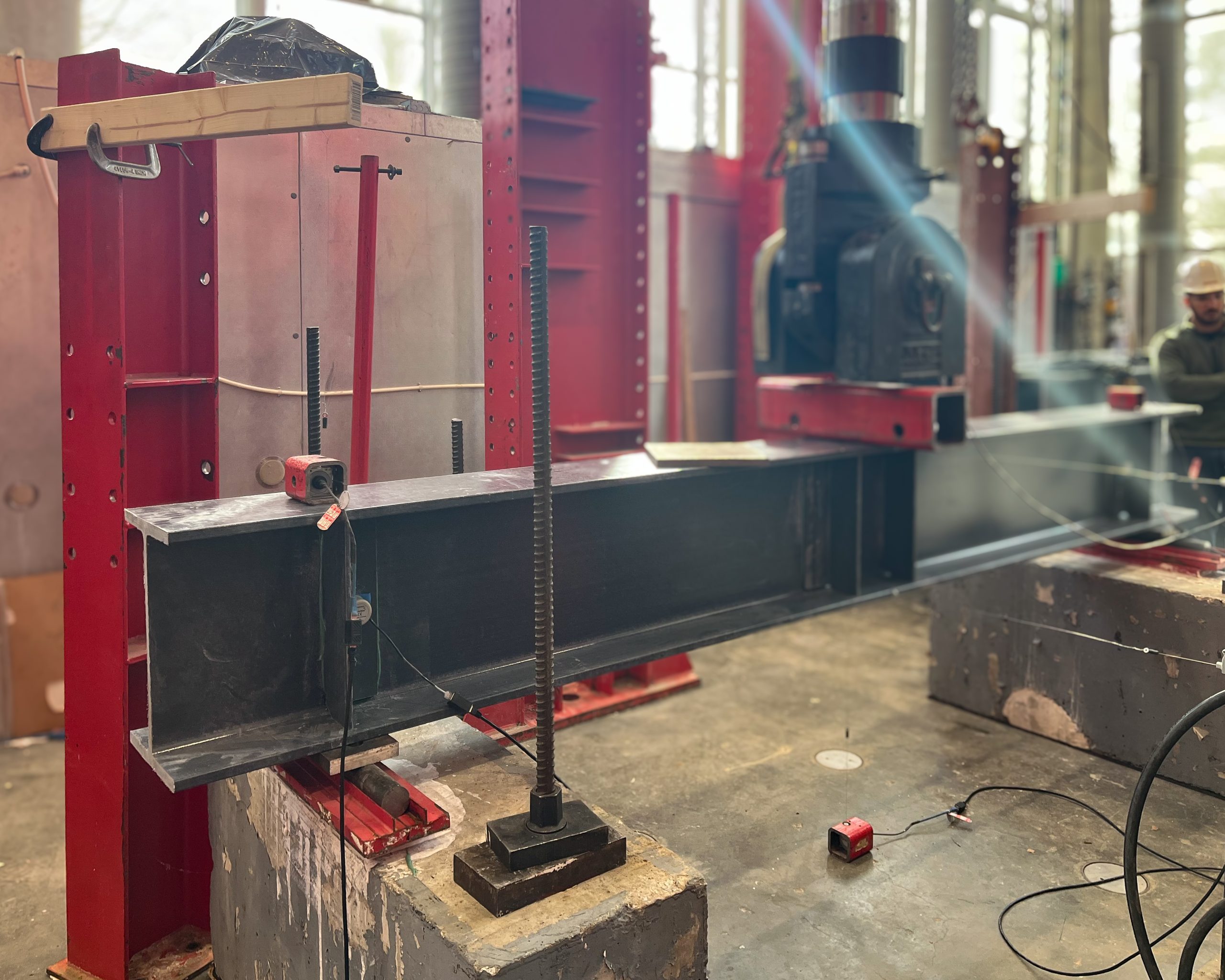
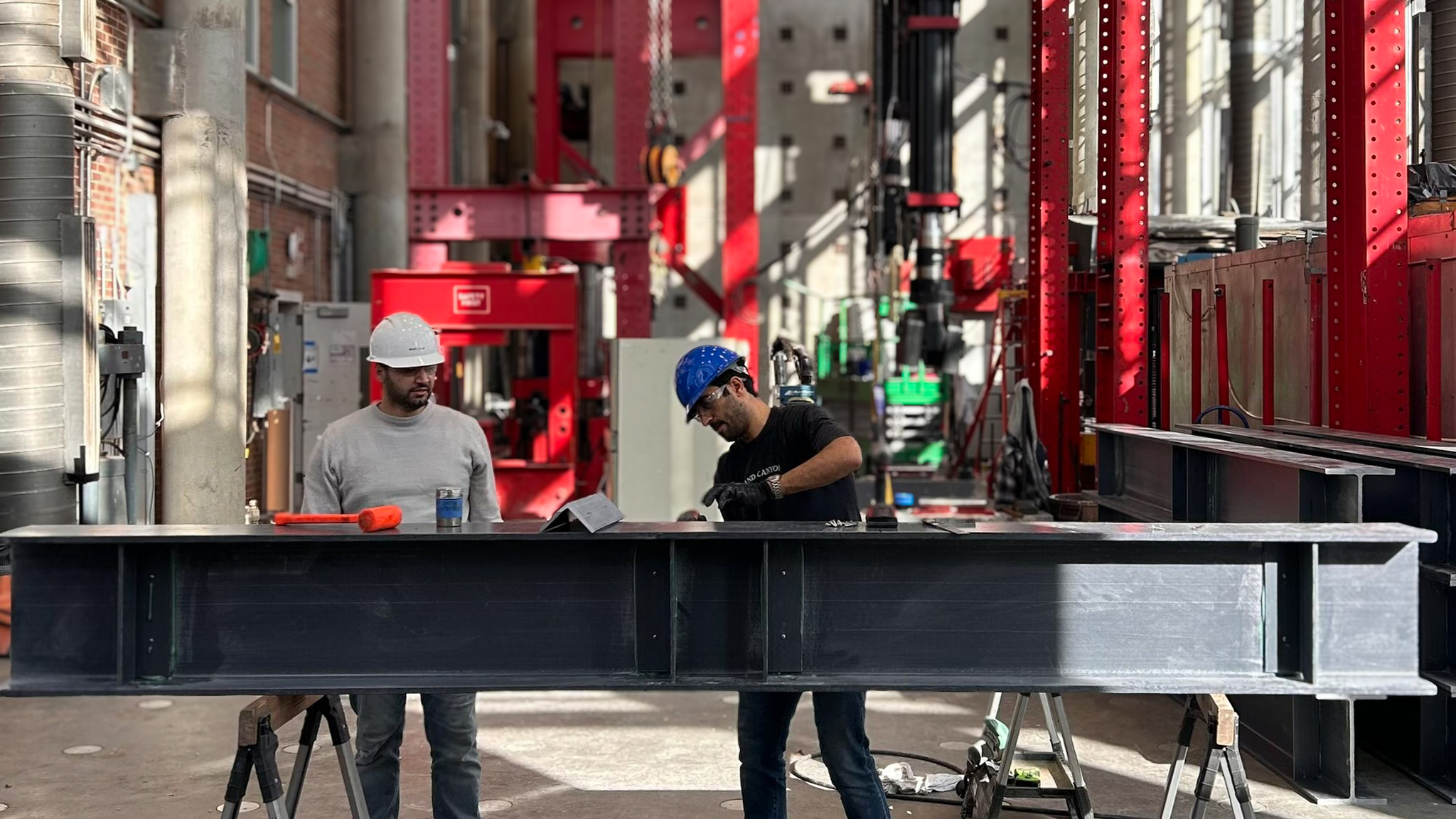
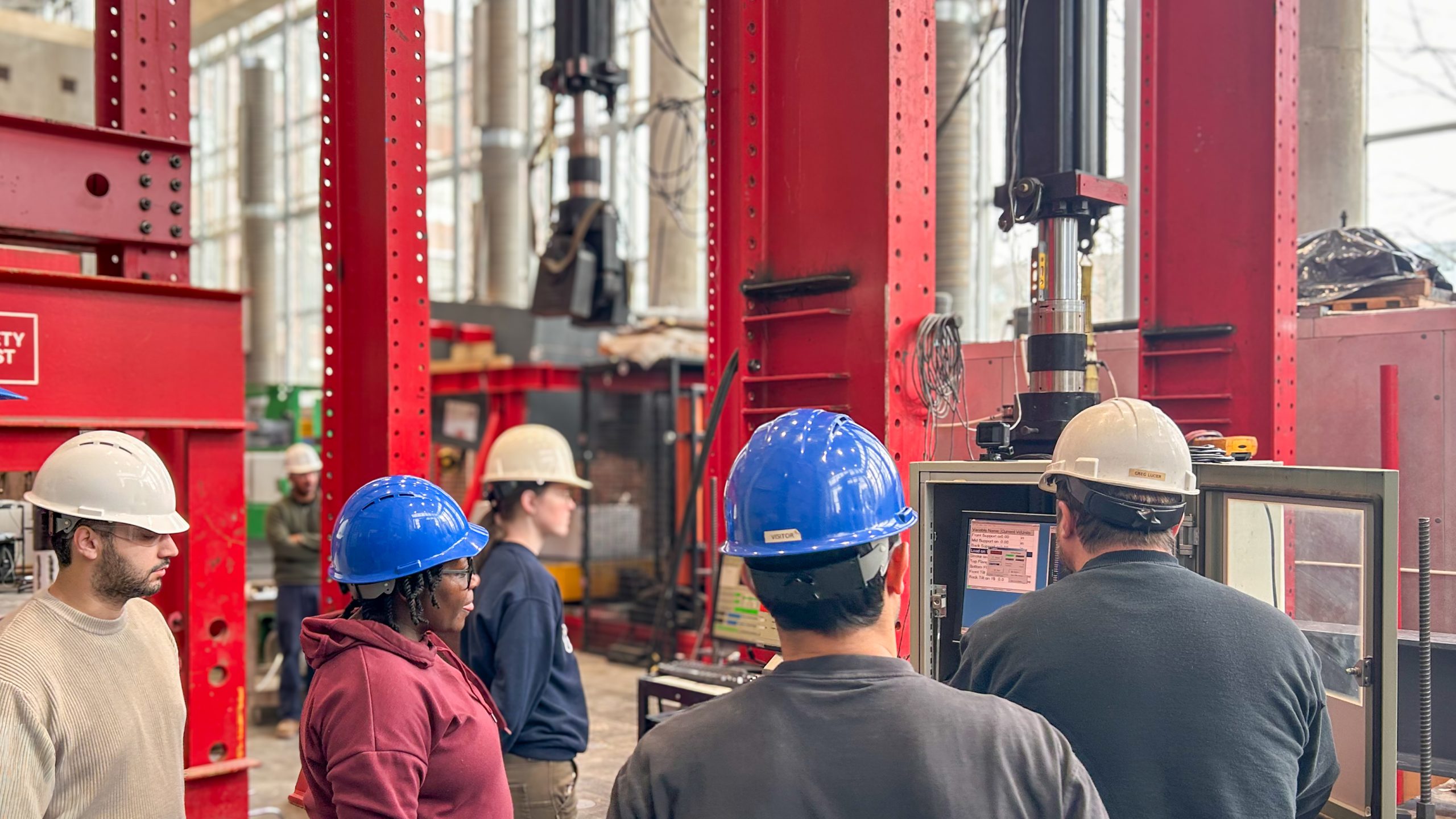
As part of this project, the Frost team served as principal investigator and participated on-site at the North Carolina State University Constructed Facilities Laboratory (CFL), supporting and observing full-scale beam testing. This collaborative academic–industry program was focused on advancing the understanding of the structural behavior and performance of pultruded FRP beams under realistic loading conditions. Direct observation of the testing provided valuable insight into stiffness response and overall system behavior under
full-scale loads.
This collaborative academic–industry program was focused on advancing the understanding of the structural behavior and performance of pultruded FRP beams under realistic loading conditions.
The results contributed to ongoing research initiatives, informed improvements to testing methodologies, and supported the development of practical design guidance for engineers working with FRP structural members.
This project strengthened industry knowledge, expanded the design toolbox for FRP structural solutions, and supported the broader adoption of pultruded FRP materials for safe, resilient, and efficient infrastructure applications.
Related projects